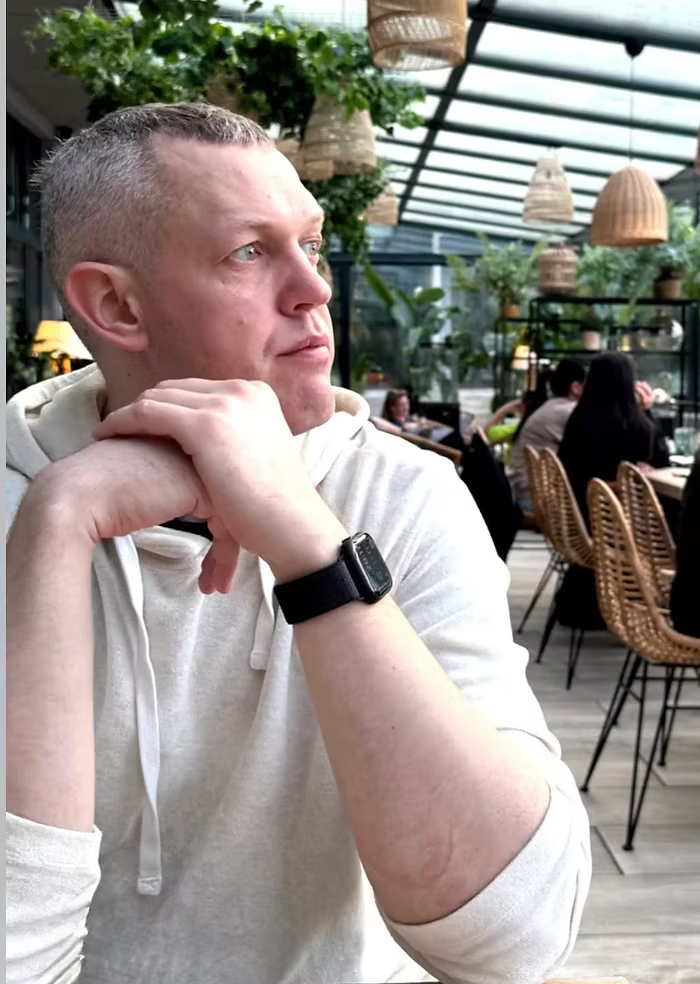
Zomni started at home. I watched my husband Maksim go from someone who slept without thinking about it to someone managing sleep like a project — and then rebuild it, step by step, with CBT-I. The app came out of that recovery. I asked him to tell the story in his own words.
Marina: You didn't always have a sleep problem, did you?
Maksim: No — sleep used to just... happen. No ritual, no effort, no thinking about it at all. Then I started working late, bringing my laptop to bed, scrolling through Slack at midnight. Something shifted, and I didn't notice until it was too late.
The mornings got heavier. So I did what any engineer would do — I downloaded a sleep tracker. Data would fix this, right? I liked having numbers. It felt like control.
Marina: When did the tracking turn into a problem?
Maksim: It didn't take long before I was obsessed. Didn't hit eight hours? Better nap today to catch up. The app said I went to bed too late? Okay, earlier tonight. I genuinely thought I was optimizing. In reality, I was chasing numbers on a screen and losing touch with what rest actually felt like.
Pretty soon, sleep wasn't something that happened — it was something I had to manage. My nights got shorter. My mornings got brutal. The naps that were supposed to help? They wrecked my nighttime sleep. So I got more anxious. Tried harder. Tracked more. And the harder I tried, the worse everything got.
I found out much later that this cycle has an actual clinical name: orthosomnia. It's when monitoring your sleep becomes the thing that destroys your sleep. Good intentions, terrible outcome.
Marina: What did it cost you?
Maksim: As sleep got worse, everything else followed. I felt drained. Disconnected from you, from my work, from my own thoughts. Days blurred together. I remember sitting in a meeting once and realizing I hadn't absorbed a single word in twenty minutes. I started reading sleep forums — and what hit me hardest was how many people described the exact same spiral.
Marina: A lot of people in that spiral reach for sleeping pills. You didn't. Why?
Maksim: Not because I wasn't tempted — because I kept reading post after post from people who tried Ambien, trazodone, whatever their doctor would prescribe, hoping for relief. Most of them said the same thing: the pills sort of worked at first, then stopped, and left them feeling worse than before.
That's when I decided: I'm not going down that road.
Marina: So how did you find CBT-I?
Maksim: One night — probably around 2 AM, because of course — I stumbled on CBT-I. Cognitive behavioral therapy for insomnia. No pills. No gadgets. Just... changing the behaviors that were keeping me awake. It wasn't a quick fix, but the logic made sense for the first time. I started reading everything I could find. Took a course from a CBT-I specialist. And slowly, things started to shift.
I stopped lying in bed for hours hoping sleep would come. Set a strict sleep window (this was brutal at first — 5.5 hours, and I hated it). Gave up napping entirely. Started getting morning sunlight, moving more during the day. It felt like I was retraining my body to do something it used to know instinctively.
When I finally met with a sleep specialist months later and shared everything I'd done, he smiled and asked: "You already know so much about sleep — why did you even come to see me?"
That moment made me smile too. Because he was right — I had rebuilt something I'd lost, and I wanted to help others do the same.
Marina: And that's why Zomni exists.
Maksim: That's why I created it. Zomni isn't a sleep tracker. It doesn't flood you with numbers. Instead, it offers a calm, structured path built around the key principles of CBT-I — principles that may seem simple on the surface, but have powerful effects when applied consistently.
CBT-I is, in many ways, a return to the basics. It teaches your brain to follow sleep patterns that were once natural — the kind of rhythms most of us learned as children, before stress, work, and modern habits disrupted them. But when those patterns break, it's hard to recognize what's wrong or how to fix it.
That's where Zomni steps in. The app helps identify what's getting in the way — like staying in bed too long when you can't sleep, or constantly shifting your sleep schedule. Then, it offers simple, tailored suggestions to help restore balance. It's not about pushing or punishing. It's about gently showing a better path, based on what actually works.
If you're in the cycle of overthinking your sleep, trying everything and getting nowhere — I've been there. And I want you to know: it can get better.
Marina: Last question. Why the name Zomni?
Maksim: The name grew out of insomnia — the very word I was Googling at 4 a.m. for weeks. But it also quietly reflects what it feels like to live without sleep.
When you go long enough without proper rest, you don't just feel tired — you stop feeling fully alive. You move through the day in a haze, like a muted version of yourself. That half-awake, half-human state? That's what Zomni aims to reverse.
It's not about zombies. It's about becoming fully human again.
Maksim: Zomni helped me rebuild my sleep, and with it, my energy, clarity, and peace of mind. I hope it can do the same for you.

Your Personal Sleep Coach
AI-powered insights and personalized guidance for better sleep

References
- Furukawa, Y., et al. (2024). Components and Delivery Formats of Cognitive Behavioral Therapy for Chronic Insomnia in Adults: A Systematic Review and Component Network Meta-analysis. JAMA Psychiatry. DOI: 10.1001/jamapsychiatry.2023.5060
- Qaseem, A., et al. (2016). Management of Chronic Insomnia Disorder in Adults: A Clinical Practice Guideline From the American College of Physicians. Annals of Internal Medicine. DOI: 10.7326/M15-2175